Sunday, May 22, 2011

SERMON: Jesus the Cornerstone

Date: May 22, 2010
Text: 1 Peter 2:2-10

When I was young, my uncle introduced me to quartz crystal. In our backyard, he pointed out some rocks, took us over to them, and showed us the smoky translucent crystals hidden within. He said that they had probably been spit out of a volcano some million or two years ago, something quite unbelievable in flat Houston, TX. It opened a whole new world to me, and soon I was taking my dad’s sledgehammer and breaking rocks all over our yard. Some were small; others were quite large. Of the crystals discovered, I kept a collection. Over the course of a summer, what once were just rocks suddenly became things of beauty and discovery.

[1]

Our second lesson is taken from St. Peter’s first letter. He writes to a group of people who made that same type of discovery. Peter says that their life before was one of darkness, aloneness, and the absence of God’s mercy. But now, because of their discovery, something has changed. Though they were once dwelling in darkness, they have come into God’s marvelous light. Though they were once alone, they now have a people they can call their own. Though they were once outside of God’s mercy, they now have experienced it firsthand.

And here’s where rocks enter the picture: Peter admonishes his hearers to draw near to what he calls the ‘living stone,’ a stone that was chosen by God and precious, intended to be used as the cornerstone of God’s new Temple on earth. The believers themselves will become stones in this building. But first Peter tells them a story, a story about this chosen and precious living stone.

When God put the cornerstone down, there were builders in Zion, hired by God to build his Temple. They were intimately familiar with all of God’s ways and works; God had been working with them for a long time. They knew his designs. When God found the cornerstone to start his new building, he gave it to the builders he trusted.

But instead of proving trustworthy, they did the unthinkable. They rejected this living stone, the cornerstone. It was as if they had said, “We know what the building is supposed to look like, and this doesn’t fit in with how we see it.” They set it aside and began to build on their own.

But that cornerstone, chosen and precious of God, could not be used for anything other than its purpose. They thought it would work better as part of the wall, but they couldn’t budge it, couldn’t make it fit into place. They thought they might break it and divide its pieces among them for various projects, but the stone just rang as their chisels broke against it. And when they tried to ignore the stone, they found it always in their way. They stumbled over it. They fell. They could not finish their work because the cornerstone had become a rock of stumbling. In other words, they could not finish because they would not start where God wanted them to start. The builders had rejected the cornerstone.

[2]

Tobias Fünke
It would be hard for us to blame them. We live in a society here in North America where we are constantly advised to build our lives on nothing save our desires, our passions, and our dreams. We, the builders of our lives, are told that we need no touchstones, no cornerstones. All we need is to be true to who we really are. We don’t want to build our lives on anything but ourselves.

A good example of this comes from the odd and off-color TV comedy Arrested Development. All of the characters in the show are baseless. They are wealthy and so are not constrained by anything. They can do whatever they want; they can follow any dream. One of the characters is named Tobias Fünke.

Tobias is tall and mostly bald. Gangly. Strange and a little ugly. He is a difficult character to watch because he has, well, no life. He began his professional career as a successful psychological analyst and therapist, helping people to look deep inside themselves to discover the root of their problems. But then, he looked deep inside himself. There he discovered that he was an Actor, with a capital “A.” This revelation turned his world upside down. He quit his job and started pursuing roles anywhere that he could, living off his wife’s family’s wealth as he pursued his dream. The problem? Arrested Development takes delight in showing its audience, again and again, how irredeemably bad an actor Tobias actually is. The darkly funny part of the whole thing is Tobias’ obliviousness. He thinks he has talent, and whenever he comes face-to-face with his weakness, he refuses to see it. He shuts it out. He tries to build his house around a dream instead of the solid rock of his professional training or his family or the reality of his own strengths and weaknesses.

Am I right to think that you and I are often tempted to live this way? I think so. We find ourselves refusing to build our houses around the solid things of our lives. Instead, we build them around our egos, our dreams, our passions. We learn to shield ourselves from criticism. We learn to pretend that the world is like we want it to be instead of the way it really is. Now, we might try to take reality and fit it into a wall we’re building or to break it up for other parts of our house, but we can’t. Reality sits there ready to be built upon. But as we ignore it, we find ourselves tripping over it, falling, breaking. We find ourselves building on the sand until one day everything we build comes tumbling down.

[3]

But the good news that Peter proclaims to his hearers is this: in the midst of a world in which God’s builders had started building their houses on sand, God set a stone in Zion, and this stone was Jesus Christ.

Jesus, God’s own Son, was chosen and precious in God’s sight. God set Jesus in Zion as a cornerstone. He was the one upon which God’s Kingdom would be built. He was the one that if people would only believe in him, they would never be put to shame. But, as we know, the builders rejected the cornerstone and tried to build on their own. To them, Jesus became a ‘stone that makes them stumble, and a rock that makes them fall.’ Their rejection saw Jesus hung upon a cross.

But, God’s love for Jesus, his precious cornerstone, meant that God would not let his chosen one see decay; the Father of our Lord Jesus Christ raised him from the dead. The Living Stone still stands, and it is upon this stone that Peter calls his hearers to be built. “Let yourselves be built into a spiritual house,” he instructs, “to be a holy priesthood, to offer spiritual sacrifices acceptable to God through Jesus Christ.” Later, he adds, “you are a chosen race, a royal priesthood, a holy nation, God’s own people, in order that you may proclaim the mighty acts of him who called you out of darkness into his marvelous light.”

For the people who first heard this letter read in their churches, they received a great gift. Even though they were not Jewish, even though they did not inherit the promises of God by virtue of their birth, they have received the promises through Jesus Christ. While they once dwelt in darkness, they have come into the marvelous light of God’s love. Though they were once not a people, now they are God’s people. Though they had once not received God’s mercy, now they have. They have a new start, a new beginning. They have the opportunity to let themselves be built up into God’s new Temple on earth, the Church. [They can build their lives on the solid rock of Jesus Christ, God’s chosen and precious cornerstone.]

[4]

Every week, close to the end of our service, immediately after the post-Communion prayer and before the Blessing, we say in unison a small passage from Scripture: “Glory to God, whose power, working in us, can do infinitely more than we can ask or imagine. Glory to God from generation to generation, in the Church and in Christ Jesus, for ever and ever. Amen” (BAS, 214).

“Infinitely more than we can ask or imagine.” We were meant to live for so much more than what our passions or our dreams or our desires can give us. We can live our lives like Tobias Fünke, constantly grasping after a baseless dream, or we can let ourselves be built on the rock of reality, a rock that St. Peter says is no one other than Jesus Christ himself. Now this treads very close to a central mystery of our faith that is expressed beautifully in the collects for Morning Prayer: “O God, who art the author of peace and lover of concord, in knowledge of whom standing our eternal life, whose service is perfect freedom…” (BCP, 11). For Christians, the limitation of obedience (and obedience is nothing more than being conformed to the reality of Jesus Christ) is not ultimately a restriction but a freedom. Disobedience, or building on the shifting sand of our own desires or passions, is slavery. It is slavery to a limited humanity. Obedience, on the other hand, is openness to God’s “infinitely more than we can ask or imagine.”

What is this infinitely more that human beings are called to? Human beings are called to stand at the boundary-line of heaven and earth, to be, as St. Peter calls us, God’s holy and royal priests, priests that offer spiritual sacrifices that God is delighted to accept. As Christ’s royal priests, we represent the world to God, offering God the things of the earth in our prayers. As Christ’s royal priests, we represent God to the world, as we read the Scripture, listen to the Word preached, and share our faith with others. In all cases, in our lives we offer spiritual sacrifices to God, sacrifices of love, joy, peace, patience, kindness, gentleness, faithfulness, and self control.

And all of this happens right here at St. Matthew’s. Being built up into God’s spiritual house, learning to be royal priests, this is the work of the Christian life. It is the reason we gather for worship. It is the reason we join together to serve our community. It is the reason we gather in small groups to learn how to offer the world to God in prayer and offer God to the world in witness. And so I commend our small groups to you again (there’s an announcement in the back of your bulletin). These are lively training grounds for the royal priesthood, where we learn to live our lives together, being built on the cornerstone that is Jesus Christ himself.

As we live quiet and peaceable lives together, praying for all and bearing witness to Christ’s love, we are built up together into God’s new Temple on earth. In the quiet, in the peaceable, in our faithful prayer and witness, built upon the solid cornerstone of Jesus Christ, God’s power, working in us, will do infinitely more than we can ask or imagine. Through us, our worship, and our service, God will be glorified from generation to generation, in the Church and in Christ Jesus, the chosen, precious, and everliving cornerstone, for ever and ever. Amen.

Monday, May 09, 2011

Reserving the Sacrament

In my church we reserve the Sacrament. For those of you unfamiliar with the practice, reserving the Sacrament means that we set aside the consecrated bread and wine of the Lord's Supper for future use. It's a helpful practice, especially for those of our shut-in members. We can then take a part of the Sunday's table fellowship to them so that, in effect, they share the same Meal with all of us.

Reserving the Sacrament is tricky for Anglicans because (to my knowledge) it is a Catholic practice tied to the doctrine of transubstantiation. Transubstantiation, put simply, means that in the Eucharistic prayers, God replaces the substance (the 'is-ness') of the bread and wine with the substance of Christ's Body and Blood. While the elements still look, feel, and taste exactly like bread and wine, their reality is Jesus himself: body, blood, soul, and divinity.

The Anglican Church in its historic formularies repudiated the doctrine of transubstantiation as "repugnant to the plain words of Scripture," (Article XXVIII) but it is important to note that the difference with Rome on this matter was a dispute over the means of Christ's presence, not the fact of Christ's presence. Article XXVIII goes on to say that the Body of Christ "is given, taken, and eaten, in the Supper, only after an heavenly and spiritual manner. And the mean whereby the Body of Christ is received and eaten in the Supper , is Faith."

Embarrassingly for contemporary Anglican practice, the Article continues, "The Sacrament of the Lord's Supper was not by Christ's ordinance reserved, carried about, lifted up, or worshipped."

So, we have the catholic practice of reserving the Sacrament. An early Anglican formulary denies that this practice is part of Christ's ordinance. This is, strictly speaking, true. Christ's ordinance includes the Words of Institution and the elements of bread and wine. But, as Anglicans since at least Hooker have maintained, just because something is not explicitly ordained by Christ does not mean it is disallowed. We have to ask whether the practice is repugnant to Scripture, that is, whether it in some way denies or goes against the grain of the story of Christ as told by the Bible.

In other words, we have to ask, as George Sumner did with the indelibility of Holy Orders, whether or not we can find an evangelical argument for this catholic practice. Is there something to which reserving the Sacrament bears witness that we find essential, good, and in accordance with the Scriptures? I think there is.

In brief, reserving the Sacrament means that what happens in space and time matters and continues to matter for our spiritual lives.

Ultimately, there is but one death in space and time that gives meaning to, shapes, illumines, and redeems space and time: the death of Jesus Christ on the cross. As bearers of a Protestant tradition, most Anglicans would say that Christ's death is once-for-all. It does not need repeating. What happened in that specific space (on a cross outside the walls of Jerusalem) in that specific time (somewhere around AD 30) matters for all space and time, and it matters not merely as a spiritual event but as a spatio-temporal-spiritual event. What happened in space and time mattered and matters.

In an analagous way we can move to the consecration of the elements in the Eucharist. Some say that the Bread and Wine are just signs. They carry meaning only insofar as they are part of the worship service. Afterwards, the elements could be fed to the dogs because there is nothing special about them at all. In other words, what was once special and important in space and time falls away from that use once the context has passed. Should the materials be saved for the next celebration of the Lord's Supper, they would be prayed over again, just like the previous service had never happened.

But, those of us who reserve the Sacrament maintain by the practice that what happened in a specific place (at the altar at my church in Toronto, for instance) at a specific time (somewhere around 11:45 am on Sunday) continues to matter, even after the worship service ends. The elements, though not changed substantially, still bear the significance of consecration. That past event continues to have significance - once-for-all significance, even - in the case of these specific elements.

Whatever we think about the means by which the Sacrament is Sacrament, reserving it bears witness to an understanding that what happens in the past matters, that bread and wine once set aside are not automatically returned to secular use as soon as the service is over. Reserving the sacrament claims a historical connection with the bread and wine's consecration in  space and time, which in turn claims a connection with the once for all consecration of Jesus Christ upon the cross. As St. Paul says, "The cup of blessing that we bless, is it not a sharing in the blood of Christ? The bread that we break, is it not a sharing in the body of Christ?" (1 Corinthians 10:16, NRSV).

Reserving the Sacrament means that we believe that things of supra-historical (spiritual) significance can happen in and as space-and-time realities. Reserving the living signs and symbols of Body and Blood claims something about the reality, tangibility, materiality, personality, and individuality of the Cross. Because Christ's consecration on the Cross was once-for-all, we practice a once-for-all consecration of the elements that enable our sharing in Christ's consecration by the power of the Spirit in faith.

What do you think about reserving the elements of the Lord's Supper for future use? How does your church practice?

Monday, May 02, 2011

Sermonic Metagaming

Since a friend of mine dropped the core rulebook on my bed in my second year of undergrad, I have, off and on, run campaigns in the Star Wars Roleplaying Game. The technical title is "Gamemaster" or "GM." The GM pulls together the story and set objectives for the players, who each play different characters. The players are free to do whatever they wish with their characters, and it's the GM's job to make sure that the story gets told and told well. An RPG ends up being an exercise in group story-telling, and, I have to say, is one of the best preparations for leading small group discussions I've ever had.

RPGs have rules that govern the physics of the imaginative world that the GM and the players create together. Dice are used to account for the randomness of the player's actions. Just because a player's character is a really good medic doesn't mean that they will always save a person's life. There are innumerable small things in life that effect the results of our actions. The dice simulate that.

Because there are so many rules, it's tempting for players to start metagaming, or playing their characters like the characters have all the knowledge that the player does. A player could, for instance, keep their character from visiting a planet the player knows from the movies is doomed to destruction. Or a player who knows the rules well could make the entire gaming session about disputing the finer points to their maximum advantage.

The common sin? They use knowledge they have of the movies or the rules to distance themselves from the story that the group is telling together.

Sermonic metagaming, a similar phenomenon, happens when preachers use specialized knowledge to distance themselves and the congregation from the story they had to that point been telling together in the liturgy.

When I was first falling in love with the Anglican tradition, I used to joke that the great thing about worship in the Episcopal Church was the most you could mess up was the sermon, and that was only 10 minutes anyway. Having been an Episcopalian now for several years, I can say from experience that sometimes those 10 minutes (or 20 or 30) can be so thoroughly metagamed so as to wreck the whole rest of the service.

I once met a bishop (in another denomination) who boasted to me about a sermon he had recently preached. He proudly told me of stripping the passage from the Pentateuch down to its JEPD sources, showing how the earliest source said something quite different than the redacted whole that his congregants had in their Bibles, and lifting up this reading as the authoritative one. This was the truth that they were to live, he told them, because this is the earliest part of the biblical revelation. He used his specialized knowledge of historical criticism to distance himself and his congregation from the liturgical story they had been telling together, a story predicated upon the biblical witness' canonical wholeness.

Pastors also metagame in their sermons when they talk every week about something they are trying to build in their congregations. "Community" and "authenticity" are popular tropes. The problem is not that these are bad things in themselves. The problem is that ministers often run roughshod over their sermon texts in order to get to them. And, ironically, I don't think we build community or authenticity very well by talking about them. Analysis paralysis seems to set in too quickly. Instead we build them by getting together and telling and living the story week-to-week. A metagamed sermon distracts from the desired goal; it doesn't seem to further it.

Now, I have to say that there are certain places in the church's life where metagaming is important and necessary. The announcements are a time set aside for just that. Adult education is another one of those places, and I would worry if a minister didn't have classes from time to time on historical criticism or the benefits of building a community of authentic believers. But, please consider keeping those things out of the pulpit. They distract and disrupt. They disable the community's participation in the weekly liturgical story. In other words, they draw attention to the preacher or to the congregation when the sermon should be drawing attention to the story of God's gracious and merciful self-giving in Jesus Christ.

Let's stop the sermonic metagaming and get into the story. It's an adventure we shouldn't want to miss.

---

Do you have any stories of sermonic metagaming? Please share below!

Monday, April 25, 2011

The Adventures of the Post-Relevant Church

My wife, Dr. Monique, and I have great conversations. One day recently, as we discussed my recent Contra Factum post on collared evangelism, she said something that jumped out at me: "Welcome to the adventures of the post-relevant church." Wow, what a phrase. It hit precisely the right note.

So, yes, welcome to the adventure.

The evangelicalism that I grew up in was concerned with 'relevance.' We had to make the Gospel relevant to our culture in order to fulfill the great commission. In college, this concern metamorphosed into a preoccupation with 'context.' The context determines everything, we thought, and it even gives us the incentive to frame the Gospel story in completely different ways, even in ways that our fathers and mothers in faith might be unable to recognize. See, for example, the growth of the megachurch movement, or the absence of the cross from many seeker-sensitive churches, or the equation of worship with emotional experience.

What I realized going to seminary is that evangelicals share the concern with relevance with their sworn enemies: the liberals. They both agree that the Gospel has to be translated into a new key in order to be relevant to the world. They only differ on the amount of 'translation' they are comfortable with.

The problem is that neither camp has done relevance well. When you step back from both the evangelical and liberal attempts to contextualize the Gospel and really look at them, you can see how severely dated they always already are. We in the churches are always find ourselves about 15-30 years behind the curve. That curve is being established in the classrooms of Ivy League universities and the halls of power, not in the Christian popular press.

The crux of the issue is that 'context' and 'culture' are moving targets. By the time that we can publish the book on being relevant to the culture, it has already moved on. As soon as we think we've become relevant, we find ourselves irrelevant again because that to which we calibrated ourselves has already changed.

So what are we left with? An adventure: the adventure of the post-relevant church. We have to stop allowing our churches to act like self-obsessed teenagers; instead, we need to embrace the fact that context just happens. It happens every moment of every day, and it is only in the faithful response to the context in which we actually find ourselves (not in the context imagined for us by the think-tank in Michigan) that the real adventure happens.

We can't catch up with the culture. All we can really do, as Andy Crouch says, is be culture-makers ourselves. Our work is to create a context, to create a space in which God may be found, and to invite others into it in order that they might become relevant to it and therefore relevant to God. (This is the meaning of Baptism, is it not?) In other words, we can only be relevant by being a little strange, by keeping our own council, and by showing hospitality to people who find that the Gospel we proclaim is the scent of life and not the stench of death.

What does the post-relevant church look like? I don't know yet. I think it will probably look different everywhere that faithful men and woman struggle to fashion themselves in the image and likeness of Christ. For me, I think this will mean wearing a collar, introducing myself to strangers, and inviting our parish's neighbours into the life of Christ's Church through Baptism. It will mean talking about sin and grace and encouraging active participation in the sacramental life. It will mean forgetting about myself for a while and just allowing the church where I find myself to be the church that it is ... and the church that it will become. In other words, this is un-self-conscious Christianity, unconcerned with 'relevance,' just concerned with being alive in Christ wherever he has put us.

In this adventure of the post-relevant church, I think we will find that relevance, like context, just happens. 

Monday, April 18, 2011

SERMON: Jesus Delays

Oregon Scientific RM313PNA Self-Setting Projection Alarm Clock with Indoor Thermometer, Blue
Date: April 10, 2011
Text: John 11:1-45
[Introduction] I have a confession to make: I hate my alarm clock. Now, there are some specific features that I enjoy. With one button, I can change the timezone. With another, I can easily set the alarm. It has both an up and down arrow, so if I want to set my alarm earlier than the previous day, I don’t have to scroll through 23 numbers to get back to the hour before. The best feature of all? It shines the current time on the ceiling. It’s invisible during the day but at night when my wife and I are laying without glasses in the bed, it’s just bright and big enough to be readable. That’s what I love about my alarm clock.

What do I hate about it, then? It wakes me up. I like sleeping. My dreams are sometimes the most peaceful part of the day. My alarm clock very rudely steps into that refreshing and relaxing state and yells at the top of its lungs, “Get up!” as it beep, beep, beep, beeps. That’s what I hate about my alarm clock.
[Page 1] Quite unlike my alarm clock which is always on time, in our Gospel passage today Jesus is late. Early on, he gets the news that his dear friend Lazarus is ill. Lazarus’ two sisters Mary and Martha had sent the word. They wanted him to come. They knew that if Jesus was there, he could make everything better and restore Lazarus to health. Instead, Jesus does one of the most frightening and confusing things in the Bible: he delays. “Accordingly,” we hear in the passage, “though Jesus loved Martha and her sister and Lazarus, after having heard that Lazarus was ill, he stayed two days longer in the place where he was.” Even though Jesus loved Mary, Martha, and Lazarus, he does not rush to their aid. He delays. Why?
We could hear the passage and think Jesus was weak or afraid. Given the way Jesus breaks down weeping (weeping so hard that the people point at him and gawk) it could be that Jesus is just too weak to face the pain of his dear friend’s sickness. Or, maybe he is afraid. Lazarus’ town Bethany is just a little over three kilometers from Jerusalem, and the disciples object, “Rabbi, the Jews were just now trying to stone you, and are you going there again?” Maybe Jesus delays because he needs to build up the courage to face a possible death. He was human after all.
Alternatively, maybe Jesus wasn’t weak and afraid. Maybe he was callous and capricious. Jesus seems to know that something is up here. He says to the disciples, “This illness does not lead to death; rather it is for God’s glory, so that the Son of God may be glorified through it” (v. 4). A little later, we hear in the story, “Then Jesus told them plainly, ‘Lazarus is dead. For your sake I am glad I was not there, so that you may believe’” (vv. 14-15). All of a sudden, Lazarus seems like a tool that Jesus uses to glorify himself. This seems to imply that Jesus is glad Lazarus dies because this way the disciples will believe. What does this make Lazarus then, some kind of collateral damage? Is his death nothing more than a means to an end, a necessary evil in the fulfillment of God’s good plan? Jesus is divine after all. He could see the whole picture. Maybe he is callous towards his friend’s pain and death, using it to his own ends.
Whether Jesus is weak and afraid or callous and capricious, either way, he does the most frightening thing imaginable. Even though he has the power to heal in his hands, even the power to heal from a distance (!), he delays. He does not go to Bethany. He lets Lazarus die.
[Page 2] Since early times, Christians in desperation and despair have prayed, “Maranatha. Come, Lord Jesus, come.” But all too often in our experience, Jesus does not come. For some reason, he delays. It is a terrifying experience to know that Jesus could step in and fix it (whatever “it” is) but doesn’t. What kind of Lord is it who allows his creation to continue suffering, continue spiraling out of control, continue giving into hate? What kind of Lord is it that stands at a distance while the world he created suffers from its sickness and dies?
We don’t know most days. So in response to Jesus’ delay, we doubt, hurry, and scramble. We doubt the goodness of a Lord who stands at a distance. We scramble to fix the problem ourselves, rushing to resuscitate the world before it passes away. We start to believe that if Jesus really is absent, then maybe we can find some other person to take his place. Maybe we can find another Christ to stand in for Jesus of Nazareth and fix the world.
Throughout human history, we’ve done this over and over again. In the mid-20th Century, in the face of a severe post-war economic depression, the German people rallied around a Christ of their own. They put their hope in him. Jesus was not coming, it seemed, so they thought they could retake their former power by force. The Christian cries of “Maranatha. Come, Lord Jesus, come” were twisted into the militaristic cries of the Third Reich. These people trusted other people with complete power in hopes that they could resuscitate the world, but they instead set out on a path that resulted in the slaughter of millions.
Jesus’ delay has effects in the history of nations, but it also has profoundly personal effects. When you and I sit alone in our houses, our cheeks wet from tears caused by Jesus’ seeming abandonment, we know what it must have been like to have been those two sisters who called to Jesus in their distress and were not answered, those sisters who mourned the death of a brother that their Lord could have saved but instead for some reason chose to delay.
[Page 3] What those sisters do not know, as they summon and wait for the Jesus who delays, is that Jesus’ love will raise Lazarus from the dead. They know that Jesus loves Lazarus. When they send word to him, the message reads “Lord, he whom you love is ill” (John 11:3). But they cannot comprehend the height, width, and depth of Jesus’ love. In their minds, love means rushing to aid. In their hearts, they believe that when they cry “Maranatha!” that the Lord Jesus is supposed to come quickly. But Jesus’ love, they will find, is something entirely different.
Jesus’ love is confident. When Jesus hears the news about Lazarus’ illness, he turns immediately to his disciples and tells them that Lazarus’ illness does not lead to death (11:4). Instead, God’s glory will be shown through it. A little later, when Lazarus’ illness has swallowed him up in death, Jesus says to his disciples, “Our friend Lazarus has fallen asleep, but I am going there to awaken him” (11:11). Jesus is confident that his love for Lazarus will win in a fight against that non-love, that anti-love that is death.
But, Jesus’ love is also compassionate. He does not accept Lazarus’ death with the stoic determination of a movie military commander who sacrifices the lives of his unit for the completion of a higher objective. Even though Jesus’ love is confident in how things will turn out; Jesus’ love also breaks his heart. When Jesus comes to Bethany, first Martha approaches him and then Mary. He receives them both and begins to teach them what it is that what he is about to do will mean. But when Mary kneels at Jesus’ feet and through choked tears says, “Lord, if you had been here, my brother would not have died” (11:32), Jesus’ heart breaks. His spirit is greatly disturbed. His face contorts with pain. He cries out, “Where have you laid him” (11:34)? When he starts walking towards the tomb of the man he loved, he breaks down and begins to weep (11:35). He arrives at the tomb ‘greatly disturbed’ (11:38).
Confident yet broken-hearted, Jesus chokes through his own tears, saying, “Take away the stone” (11:39). When Martha questions him, he turns his swollen eyes to her, “Did I not tell you that if you believed, you would see the glory of God” (11:40)? And Jesus prays to the Father, thanking him, allowing the people around to see that there is a relationship of trust between them, one that will empower him to do what’s next. And Jesus now, with eyes puffy and snot drying in his beard, confidently raises his voice, “Lazarus, come out!”
And that is precisely what Lazarus did.
[Page 4] When my alarm clock goes off precisely on time every morning, my brain starts to work. It tries to incorporate the beep, beep, beep, beeps into the fabric of whatever dream that I am dreaming. My brain tries to tame the alarm into something that is a part of my dream world; it tries to make it something that I can ignore.
But, I can’t. Eventually the sheer otherness of the alarm shatters my dreams and brings me startling awake. It’s 5:00 am. It’s time to go running. I am left with a choice. Do I ignore my alarm and retreat to the safety of my dreams? Or do I embrace the real world and walk into the day?
I don’t know if Lazarus had the choice when he heard Jesus calling from the door of his tomb, but we do. When Jesus calls us (“Christian, come out!”), we can get up and start walking in the light, or we can choose to remain children of the darkness, those people who prefer to believe the world’s destructive illusion instead of its illumined reality.
But, one thing is for sure. The life we are living before we hear Jesus’ voice calling, that life is the entombed life, the life of death, the life of the dream world. Jesus’ voice, when it calls us to new life, is painful. It disrupts our slumbering selves. It for the first time snaps our eyes open in shock, in disorientation, in sheer incomprehension.
But if the voice that calls us is the same voice that called Lazarus from the tomb, then we can know that it is the voice of love. It is not the voice that we expected, because we expected God’s love to be the thing that rushes to fix us, that rushes to heal us, that rushes to meet our needs. But, instead, when we hear the voice, we hear it as a voice that has delayed. It did not come when we expected it, as part of our dreams, but as something that intrudes upon and sometimes shatters them. Even though it seems to us like the voice is delayed, it has come precisely at the right time, precisely when God would have us get up and walk out of our tombs into the light of a brand new day.
Jesus’ love called Lazarus from the dead. Jesus’ love calls us into newness of life. Jesus’ love is the reason we gather here this morning. Jesus’ love is what we will soon receive, memorialized, in our hands and in our mouths. Jesus’ love that led him to a cross, that led him through death to a resurrection, that love is the love that is God Himself, God Almighty, God the one and only. He is the One that we adore, that we worship, that we love. Even when he delays, we cannot put another in His place because He alone is the one who loves us enough to call us by name and rouse us from our sleep. He alone is the one that we worship, here in this place and now and forever, world without end. Amen.
In the name of the Father, and of the Son, and of the Holy Spirit. Amen.

Monday, April 11, 2011

Spiritual Malpractice

It's been one of the joys of working in Toronto to have spent time with people on the edges of the church's life. A common thread in their stories is that they used to go to church but then something happened. Usually that something had to do with a minister's behavior. Brow-beating, yelling, being pretentious - you know the lot. Eventually, a phrase surfaced for me to describe this constellation of bad behavior:

Spiritual malpractice.

Doctor's are often accused (and sued) for malpractice. We who acquire the professional degree for ministers, the Masters of Divinity, should also be on the look out for our own malpractice. Wikipedia's definition goes like this:

Malpractice is a type of negligence in which the misfeasance, malfeasance or nonfeasance of a professional, under a duty to act, fails to follow generally accepted professional standards, and that breach of duty is the proximate cause of injury to a plaintiff who suffers damages.

Misfeasance is doing the right thing wrongly; malfeasance is doing the wrong thing; and nonfeasance is the failure to do the right thing. There are many areas in which clergy practice can veer into malpractice. Consider the minister who preaches nothing but sin and never quite gets to grace. (Both liberals and conservative do this far too often.) That's an example of both misfeasance (doing the right act wrongly by never moving from cross to resurrection) and nonfeasance (not doing the right thing of preaching resurrection). Or consider the minister who doesn't provide for the education of the congregation (nonfeasance) or the minister who abuses authority by absolutizing his or her own power (misfeasance). The examples abound.

Talking about spiritual malpractice under all three headings is important because there is very real and damaging spiritual malpractice propagated against parishioners that has nothing to do with sex or money (common examples of malfeasance). It is also important because it gives us a way to name someone's negative experience of the church as an anomaly. Using this language allows us to say that spiritual malpractice, while certainly common, is neither the norm nor the ideal of the Church's life.

The other thing that using this language does for us is remind us that ministers are professionals. We have duties and obligations placed upon us by our profession, just like doctors, lawyers, and business people do. The clerical vocation may be more than a professional one, but it is not less.

In other words, clergy need to be at the very least good functionaries.* We need to know our duties and to do them well. Again, we are more than mere functionaries, but we are not less. If we do not take our mundane responsibilities seriously, how can we be expected to treat our spiritual ones? To avoid spiritual malpractice, we have to start with the mundane, to learn to keep our promises, and to treat people with the respect and care they deserve.

*I have a feeling that both 'high-church' and 'low-church' ministers would react negatively to the language of 'functionaries' for the same reason: clericalism. Whether you believe that the priest is an ontological superhero ('these hands were made for chalices not for calluses') or that the minister has a 'spiritual' vocation that frees him or her from administrative responsibility, the case is the same. Ministers tend to think of themselves more highly than they ought.

Monday, April 04, 2011

SERMON: Living Water

Date: March 27, 2011
Sermon Text: John 4:5-42

Photo by Willam Mittelsteadt
[Introduction] I've heard my whole life that I should get 8-10 glasses of water per day, that drinking water was good for me, that it would make me healthy and strong. I learned this week some of the reasons why water is important for life. It does things I never thought about. It lubricates our lungs. Without water, we couldn't convert oxygen into carbon dioxide. It also helps our digestion. It keeps things, ummm, moving from the mouth on down. But, most interesting to me at the moment because of my family's history, water helps the kidneys get rid of the toxic material that builds up in our bodies. The kidneys collect it, and without water, those toxic things sometimes dry up and harden into kidney stones. Water helps our body remove the poison we carry in our bodies. Water is important to life.

[Page 1] In our Gospel lesson today, Jesus needs water. He sits at a famous well in the Jewish no-man’s land of Samaria. The noon sun beats down on him. He is tired out by his journey, sitting alone while the disciples rush into the neighboring city of Sychar to get food for themselves and for their weak Rabbi. He is so thirsty that when a woman appears carrying her jug to draw water alone in the noonday sun, the first thing he says is, "Give me a drink."

The woman recognizes the oddity of the situation. Here is a Jewish man sitting by the well. Jews don’t normally go through Samaria. On top of that, she’s a woman. Why would a man address her like that? She boldly asks Jesus, "How is it that you, a Jew, ask a drink of me, a woman of Samaria?"

Jesus nods with respect. Not many women would talk back in this way. But, instead of repeating his command, he engages her in conversation, "If you knew the gift of God, and who it is that is saying to you, 'Give me a drink', you would have asked him, and he would have given you living water." Now this gets her attention. The woman came to the well to get water, after all. In the dry places around Sychar, she and her people had to draw water from deep in the ground to survive. It was hard work. There was no 'living water' which is what they called streams, brooks, and rivers. There was no living water from which they could easily draw. There was only the day-in and day-out return to the well.

The Samaritan woman is intrigued, so she sets her water-jug down and asks him where to get this living water. But Jesus sees deeper than the woman’s thirst and answers the question that he finds buried there: "Everyone who drinks of this water will be thirsty again, but those who drink of the water that I will give them will never be thirsty. The water that I will give will become in them a spring of water gushing up to eternal life." Jesus put his finger on something: the woman was not only physically thirsty; she was spiritually thirsty as well. She knew the hard life. She knew what it was like to be used and abandoned. She knew what it was like to be ostracized by her community. (Only outcasts gather water alone.) The thirst she felt in her mouth and throat every day only masked the deeper thirst. Like someone weak from a long journey baking under the noonday sun, her whole being yearned for something else, something greater, something that would satisfy.

[Page 2] We, too, suffer from that deep and hidden thirst. It hides just below the surface and expresses itself as a desire for other things. We feel bored and feel the need for entertainment. We feel like our lives lack meaning and feel the need for worthwhile causes. We feel guilty for all the things we can’t fix and feel the need for self-recrimination and self-flagellation. These are all normal feelings to have, all normal antidotes to try. We think that with the correct habits, the proper administration of alcohol, glossy entertainment, and distracting games, we might have found the solution as we return again to the wells of our choice. We think we might have found a way to satisfy our thirst.

But, I think that just like the Samaritan woman, we have to acknowledge that the true nature of our thirst is hidden until Jesus comes to meet us at our well, at the place we repeatedly go to satisfy ourselves. Jesus asks us for a drink there, and we engage him in conversation. He points out that there is something higher and better than the small, shallow well to which we keep returning. And in that conversation, our eyes are opened to that deeper thirst.

I think we’ve all had experiences that resonate with this. On Wednesdays and Thursdays, I work at the church, and it is not uncommon for me to pilfer a couple of cookies in the afternoon. That leaves me feeling great. I’m not hungry; I could go for hours, I think. That is, until I walk into Nell’s office for our small group and smell the cooking food: pasta or Indian food or chicken. Assaulted by the smell of real food, my stomach rumbles, my skin flushes, and my knees go weak. My body had been hungry all along. The cookies were a thin veil placed over my body’s need for real nutrition. When confronted with the real thing, the cookies seem like a mirage. They were attractive but ultimately did not satisfy.

And when Jesus comes to meet us, he uncovers that deep thirst under our perceived needs, that deep hunger in us, just like he did for the Samaritan woman. He uncovers a thirst we did not know, a deep, hidden thirst for God.

[Page 3] "Jesus said to her, ‘Everyone who drinks of this water will be thirsty again, but those who drink of the water that I will give them will never be thirsty. The water that I will give will become in them a spring of water gushing up to eternal life’" (John 4:13-14).

In our readings today, there were two instances of being thirsty and being led to living water. First, in Exodus, the children of Israel, thirsting in the desert, come to Moses and ask him to give them water. "Give us water to drink," they say (Ex 17:2). In response, Moses appeals to the LORD. The LORD sends Moses to a rock at Horeb and says, "I will be standing there in front of you on the rock at Horeb. Strike the rock, and water will come out of it, so that the people may drink" (Exodus 17:6). When pierced with Moses’ holy staff, the rock gives living, running water in the desert and satisfies Israel’s thirst.

Second, with the Samaritan woman, Jesus repeats the pattern. "Give me a drink," he says to the woman. When she appeals to the Lord about how to get this water, he tells her that he, the Messiah, will give Living Water in the desert to whoever asks. This water, unlike the flowing water that came from Moses’ rock, unlike the water that could be drawn from Jacob’s well, this water will be the water of eternal life. Not only will it satisfy the thirst of the woman, it will cause a deeper well than Jacob’s to spring up within her. Jesus himself will satisfy her thirst.

Both these patterns of thirsting and living water are taken up later in John’s Gospel. We find it in John 19 where Jesus is dying on the cross. When he realizes that his journey is now complete, he says out loud, to fulfill the Scripture, "I am thirsty." It is noonday, just like it was at the Samaritan well, but there is no one to engage him in conversation, no opportunity to say the words "Living Water" or "Eternal Life." Instead, knowing that all has been accomplished, he bows his head, says "It is finished," and gives up his spirit.

The leaders didn’t want to leave the bodies up on the crosses, so they sent the Roman soldiers to break the legs of the crucified ones. When they found Jesus already dead, they did not break his legs. Instead, the Scripture says, one of the soldiers took his holy spear and pierced Jesus, God’s Holy Rock, in the side, and at once blood and living water poured out. Having taken on our thirst, having taken on our death, the living water that will well up in us to eternal life is poured out from his side. Jesus’ own life is the Living Water, and he has come to satisfy our thirst.

[Page 4] There are many images of water in the Bible. Noah and his family survive it in the ark. The people of Israel cross out of slavery and into the Promised Land through it. And all the images of water in the Bible coalesce around the central act of Christian Baptism, a mystery that we celebrated a few weeks ago for little Jasiah. Baptism doesn’t save us. God saves us, as Chris preached last week, through water and the Spirit. Whether faith comes first or faith comes later, it remains the case that those who find Christ’s living water welling up within them are either those who have been baptized or those who are being driven inexorably by Christ’s Spirit towards baptism. Coming under the water is the outward sign of the inward and spiritual reality of God’s saving grace. Baptism either completes what faith starts or starts what faith completes. Either way, it is the direction we move if we want to know this living water, quenching our thirst, welling up within us to eternal life.

This means a few things for us. First, if we drink from the Living Water, if we find ourselves washed in it, we will find our deepest thirst quenched. If we come to the water of life, we will suddenly be free from the need to seek out other ways to satisfy our deepest longings. We will no longer have to find cheap entertainment or petty diversions or harmful habits to distract us. We will have welling up within us the source of eternal life and from that source we will draw for the rest of this life and for the life to come.

Second, this baptismal life means something else as well: we are commissioned and sent to be labourers in the harvest. Jesus says, "But I tell you, look around you, and see how the fields are ripe for harvesting. The reaper is already receiving wages and is gathering fruit for eternal life, so that sower and reaper may rejoice together. For here the saying holds true, 'One sows and another reaps.' I sent you to reap that for which you did not labour. Others have laboured, and you have entered into their labour'" (John 4:35-38). The Samaritan woman ran into the city and told everyone what Jesus had done for her. We are commissioned to do the same.

So, I challenge you, brothers and sisters, in the name of Jesus Christ, to examine yourselves in this Holy Lent. If there are any among you who find yourselves drawn to Christ, be baptized. Be cleansed by the water that flows from Jesus’ side and take your place as God’s adopted son or daughter. If you are already baptized and yet find all this talk of living water new and strange, consider a renewal of your baptismal vows and enter again into the life of grace. If you know the living water and find it welling up within you, get confirmed; let the Bishop put his hands on you to commission you to the life of love and service.

If you find this morning God is moving you towards baptism, renewal, or confirmation, please let us know in some way. You can come talk to me or Fr. Ajit; you can reach out to a friend; or you can indicate your interest on the ‘Welcome to St. Matthew’s’ cards in the pews in front of you. Fill them out and drop them in the offering plate when it comes by.

But, whatever the case, don’t hold back. Jesus Christ himself, the Living Water, poured himself out for us, for you. He loves you and wants to lead you into newness of life. He wants to feed you with his own bread and wine. Come to the river of Living Water that ever flows from him.

In name of the Father and of the Son and of the Holy Spirit. Amen.

Monday, March 28, 2011

Collared Evangelism

from Clergy Shirt USA

I think every clergyperson who owns a collar should give 'collared evangelism' a shot. Here's my story.

The church I work at is small. We average about 50 people on a Sunday. We also have no parking. We could probably squeeze twelve cars into our lot if we tried really hard, and there's no room for expansion in our historic neighborhood.

That means we're stuck. If the church is going to thrive, then we have to become a parish church again; that is, we need to have the majority of our congregants walking to church. The problem? We live in a largely dechurched and unchurched neighborhood. Very few people will come on their own.

The solution? Some good old-fashioned evangelism. We have to be in our neighborhood inviting people into relationship with us, with our church, and with God.

But, another problem emerges. When was the last time you introduced yourself to a stranger in a local restaurant? I mean not just saying hello but starting a conversation and exchanging names and business cards? It's been a while, hasn't it? Generally, this is hard because people don't trust strangers. Specifically, this is had because I'm more introverted than extroverted. Because of generalized distrust and my own uneasiness, it's just hard to talk to strangers.

Over the last several months, "collared evangelism" has developed in my imagination. The church where I work rents space to a daycare. There are children and parents about, and I need some way to be marked out as 'belonging' in the church, so I always wear my collar. I noticed that as I wore my collar on public transit to and from the church that strange things started to happen. People approached me. Lots of people started stopping me to get directions. One woman told me about the break-up of her first marriage. The collar did make some people uncomfortable, but it attracted others, not all of whom had church backgrounds.

For some reason or another, in 21st century Toronto, the collar makes me a safe person to talk to. The collar is a uniform. It marks me off as a 'public' person.

So, I'm scared of strangers and those strangers are scared of being talked to by strangers. But, I have to overcome those fears for the sake of the Gospel in our parish's neighborhood. A simple solution presented itself to me: Be a public person. Wear a uniform. In my case, wear a collar.

A plan for collared evangelism developed. I already have a business card with the church's information and service times on it. I decided I would go into neighborhood businesses like coffee houses and restaurants and take advantage of three moments: when I walked in, when someone joined me in line, and when someone sat next to me.

When I walk in, I smile and greet the people behind the counter (if they aren't swamped). Several of the staff at the local coffeehouse already know me by name.

When someone joins me in line or sits down next to me, I say something introductory about the weather or their laptop or whatever. Then I say, "Hi, I'm Jason. I'm a priest at St. Matthew's on First Avenue just up the way." They usually introduce themselves, and we enjoy a few minutes of small talk. When the conversation starts to die (sometimes it takes 30 minutes!), I say, "I'm in the habit of giving out my card. Would you like one?" Everyone has said yes.

I made it into a game and started keeping track of the number of cards I give out. I'm up to 14, and I've invited 2 of those people to church. That's 14 cards in only 5 visits to local establishments.

Now, most priests I know who are older than me hate wearing their collars in public. They either think it's a holdover from established-church days or that it's just plain pretentious. They assume that the culture around them is holding a list of grievances that they are waiting to take out on clergy. Or, they think that they have to hide the church for a while until they can get people into a relationship with Jesus. Then, and only then, will the church make sense.

But, there's another priest in the Diocese of Toronto who through a mutual friend heard about my experiment. He is new to his cure and has been trying to get to know people around his neighborhood. But, as he would start conversations with people in restaurants or other local places, he would run into the strangers-are-scared-of-strangers phenomena. People wouldn't engage him.

Then, he started wearing his collar . . . and everything changed. In a matter of weeks, he had two complete strangers start attending his mid-week Bible study.

Crazy and kinda counter-intuitive, eh?

So, those of you clergy who have collars and feel the call to do some evangelism in your neighborhood, I invite you to join me in this 'collared evangelism' experiment. I'll be collecting stories and anecdotes in the new Collared Evangelism Facebook group. Please come join us and share your stories, both good and bad!

Wednesday, March 23, 2011

New Video for Change Anything

A few weeks ago, I posted an early review of Change Anything by the VitalSmarts team. Here's a new video that really brings the appeal of the book home.


Monday, March 21, 2011

Clergy as Superheroes? Questions about Ontological Change

photo by Elvis Santana

It's been said that when someone is ordained, they receive an indelible character; that is, their soul is somehow changed to allow or enable the execution of their ministry. In other words, it is said, ordination effects an ontological change in the person receiving ordination. There is what they were, and now their very being has been changed.

Right off the bat, I find this idea a little dodgy. Are we really saying that ordinands are superheroes? Is it like the Roman Catholic billboard that puts the white silhouette of the clerical collar against a black background with the words, "Yes, you do get to fight evil. No you don't get to wear a cape"? While George Sumner's book Being Salt has helped me understand better how we might mean indelible character when translated into an evangelical key, I'm still uncomfortable with the idea.

But there is a problem: anecdotal evidence mounts.

When I was ordained a deacon, something happened. It was like something settled on me and stuck there. I felt it. I felt it that day and felt a resulting confidence in my ministry. The call was settled and received; I felt a new freedom to be a minister of the Gospel.

But then, when I was ordained a priest, something else odd happened. I work at St. Matthew's Riverdale in Toronto, which shares its facilities with a daycare. The children paid me no mind the six months I worked there before. But, the first time I saw them after being ordained, several of them stopped what they were doing and ran to me. There was an awe, a wonder, on their faces. Needless to say, it was an unnerving encounter!

And I'm not the only one to have these types of experiences. They are whispered about and wondered over everywhere I talk to clergy.

What does it mean? How could we explain it theologically? I'm not sure, and I think we might have gotten ourselves into trouble by trying too hard to do so. I'm no superhero, but I know that I am now different than I was. I am coming to believe that my fathers and mothers in faith wrestled with the same experience in their own ordinations. I might not like their formulations, but I am grateful that they tried to bring their experience to speech. Even though I might use different words, I don't think I could bring these experiences to expression without their help. Thanks be to God for the wisdom of the ages.

Are you a clergyperson? What was/is your experience?

Monday, March 14, 2011

Post-Liberal Catholic Anglicanism?

It's been said that Anglicanism has three major parties: the Evangelical, the Anglo-Catholic, and the Liberal. There have been overlaps among these parties. It is not uncommon to find an Anglican seminary devoted to liberal Catholicism, and it is becoming increasingly common at Evangelical seminaries to have Anglican ordinands genuflecting, crossing themselves, thinking more and more highly of the ever-Blessed Virgin Mary, and longing for the baptismal font to be filled with Holy Water.

Given our theological training, I think it would be wrong to call us "Evangelical Catholics," even though we are "evangelical" in the classical sense of the word: we're Protestants. But, we resemble in our worship, practice, and ethos Liberal Catholicism more than we do American Evangelicalism. Our Yale-school teachers are sometimes called "Post-liberals." Does that make us Post-Liberal Catholics? If so, what are the contours of Post-Liberal Catholicism? How does it interact with the Reformation? Who are its guiding lights? Where might it take us in the future?

The label of Post-Liberal Catholic just seems to fit me and others I know. Where do you fall?

Monday, March 07, 2011

Our Churches as Self-Obsessed Teenagers


My wife Dr. Monique and I recently had a conversation. The topic: the North American church. Monique's earth-shaking observation: Our churches act like self-obsessed teenagers.

Think about it, she said. Self-obsessed teenagers, shoulders slouched, spend all of their time worrying about what others think of them. Every little thing builds into the story they tell. "So and so doesn't like me." "She said that little thing about enzymes in science class just to make fun of me." You remember that time in your life.

Friday, March 04, 2011

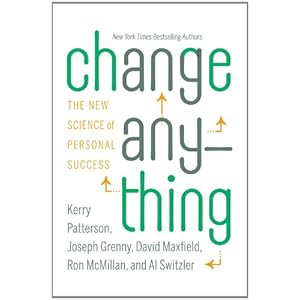
Change Anything


I just finished reading an advance copy of Change Anything: The New Science of Personal Success by the team at VitalSmarts. They're the ones who brought us Crucial ConversationsCrucial Confrontations, and Influencer, all books I've become convinced are must-reads for clergy. Crucial Confrontations stands out because it teaches skills for 'speaking the truth in love' to those who violate agreed upon expectations - something very important for those of us who lead volunteer-based organizations. Crucial Conversations teaches 'tools for talking when stakes are high,' a relevant skill. Influencer delves into the six sources of influence, an idea that Change Anything applies to personal success.

Change Anything argues that we all fall into the 'willpower trap' which convinces us that if we fail to make a change, then it is all the fault of our faulty wills. No, Patterson, et. al., argue, there are at least six sources of influence that condition our behavior, only one of which is our own personal motivation. If we only have one of the six on our side, then we're outnumbered and should not expect to see positive change happen. If, however, we can demystify the six sources and develop change plans that address them, then we will be much more likely to achieve the change we want.

The six sources comprise of three sources of motivation (personal, social, structural) and three sources of ability (personal, social, structural). Our "wills" are personal motivation. But, they're only one of the six. If we really want to change something, we have to engage the other five. Not too long ago, I decided that I needed to cut back on coffee consumption. One simple change completely removed my will from the equation: I washed and stored my automatic coffee maker. Suddenly, it was easy to consume a reasonable amount of coffee per day. That's an example of the structural ability source of influence at work. Without easy access to large amounts of coffee, my intake dropped without having to fight temptation one bit. Amazing!

Change Anything, due out April 11, 2011, is important for pastors because it gives us a vocabulary to help people change, which is the point of our work. We are called to be stewards of ours and others' sanctification. This little resource goes a long way towards helping us see the insidious ways that the world uses to keep us in its grasp. It also gives us resources to rapidly and effectively change our own behaviors. Whether we need to do more evangelism or keep better track of the church's books, Change Anything will be a good place to start to develop a change plan to make us more effective ministers of the Gospel of Christ. I recommend it, and the other books from VitalSmarts, with no reservations.

I'd love to have a conversation about the theological implications of a book like this - if you're interested, join me in the comments.