Showing posts with label Profiles. Show all posts

Thursday, January 25, 2007

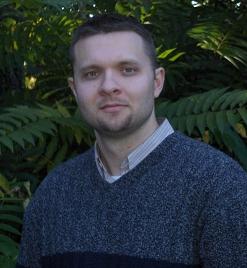
Student Profile: Chris Pino


1. Tell us about your life. Are you married? Where did you grow up?

I was born in 1980 in Buffalo, NY. My father was the head of the
mental health division of Catholic Charities in the Buffalo area, and
a professor in Psychology at D'Youville, SUNY Buffalo and St
Bonaventure at various points. Now he has retired to part time
private practice. My mother is a nursery school teacher.
As a child I loved to play sports, and I spent almost all my time
outdoors. I used bike everywhere, and I especially liked to
fish. Anytime I was inside I was either playing Nintendo, sleeping
or eating. I have an older sister who is married, and has a child,
my nephew Sean. My younger sister, who is two years younger than me,
lives in Miami Beach, Fl. I have a much younger brother, Nick, who
is now only 16. I am especially close to him because I helped to raise him.
On August 16th 2003, I was married to Tricia Joy Eddy. We have been
married for three and a half years. She is a music teacher at Currey
Ingram Academy in Brentwood, TN.

2. Tell us about your education. Where, when, and in what have you
done coursework?

In 1998, I started my undergraduate education at SUNY Buffalo in
Chemical Engineering. In the middle of my sophomore year I
transferred to Cornell University, where I completed my B.S. in
Engineering as a Bioengineer.

I started graduate work at Vanderbilt University in
2002, and finished my Ph.D. in Biomedical engineering in December of 2006.


3. Tell us about your faith journey. How did you come to faith in
Christ, and how has your faith been strengthened/challenged by your
academic calling?

I grew up in the Catholic Church, and have believed that Christ was
my personal savior since I was a child. However, in the past few
years, I have learned to see faith in different ways with the help of
my wife Trish. I now see works as fruit of Christ's life in us,
rather than personal sacrifices, and I see everyday and mundane
activities as opportunities for worship.

Academia is a harsh and competitive atmosphere, which requires me to
lean heavily on faith. I am bombarded by atheist messages each day
working in the sciences. I know that I am being called to persevere
in this environment, to show non-Christians love, and to serve as a
voice for Christian morals in bioethics.


4. Tell us about your involvement with GCF. How has GCF encouraged
you in both your faith and your academic calling?

I have been involved with the Vanderbilt Graduate Christian
Fellowship since fall of 2002. When I first arrived at Vanderbilt in
2001, I was unaware that the group existed, until Mark Bray recruited
me. Since then, I became part of the leadership team, and have been
the communications coordinator, Webmaster, and small group leader for GCF.
GCF has had an incredible impact on me. The community of believers
around me has been a great support during a difficult time in my
graduate career. I have been enriched by serving the group, and have
grown in faith because of the relationships God has blessed me
with. Both my wife and I have enjoyed the many opportunities for fun
and fellowship over these years!

5. If, based on your journey in faith and academia, you could tell
the Church one thing, what would it be?

I would encourage the church to lead the world to faith
by showing Christ's love through serving orphans, widows and the
poor. Those without faith are unlikely to be convinced to believe
through arguments, but, if you involve them in service, and they get
a glimpse of what Christ's love looks like, they will listen with an
open heart.

Saturday, December 23, 2006

Student Profile: Roger Jackson

GCF Profile – Roger Jackson, 12/21/06

1. Tell us about your life. Are you married? Where did you grow up?

I was born in Mt. Clemens, Michigan at 11:57PM on October 27, 1977 to my parents, Roger & Carolyn Jackson. My older sister by about six years, Danell, and I grew up in a small farming town in the thumb region of Michigan named Imlay City. My father was a journeyman tool-n-die maker (and worked 40-60hr weeks) and my mother was a homemaker until I was age 10. My sister graduated as salutatorian of her 1990 graduation class from Imlay City High School and was given a full-ride academic scholarship to attend Central Michigan University, well that was until CMU revoked it because my parents “made too much money.” To this day my sister has only achieved her associates degree as she has had to work full-time while going to school to get as far as she has to date. On 12/02/90, my dad had the first of two heart-attacks in a two month period of time. Our family naturally became a trauma family overnight and spent the next four years in recovery. In July 1991, our family moved out to Mesa, AZ where we lived for 14 months (in hopes that the climate would speed my dad’s recovery and it did) and where I was nearly strangled to death in gym class by gang-wannabes. In September 1992, we moved back to Mt. Clemens, Michigan and lived with my grandparents for about two months. The State of Michigan, who had promised to finish my dad’s vocational retraining, reneged and told him instead that our family was “better off with him dead than alive.” The State of Ohio on the other hand agreed to take his case on, so we moved to Findlay, Ohio, where I began attending Findlay High School (this my 3rd high school in a three month period of time). At this point, my life was empty of reliable friends and devoid of joy. Life was cold, dark, empty, and I was hanging on my last straw. But, once again God showed Himself faithful to our family and to me. [Note: I grew up in the Church and accepted Christ as Savior at age 10 and was baptized at age 16. It was at age 10 that God gave me Bill Gaither’s song, “Because He Lives”, which became one of my anchors through the years above and since.] It was by His Grace and providential care that our family was slowly healed over the next several years. He surrounded me with a community of faith from within FHS from the very day I stepped in the door, a community of faith and friendships that would sustain me to the end of high school. Throughout high school, I was active in both membership and leadership positions in Student Council, National Honor Society, and the Mock Trial team. I was an honors student, who graduated 8th in my 1996 graduation class. Desiring a strongly Christian and intellectually stimulating academic environment, I attended Calvin College (Grand Rapids, MI) where I was pre-med and graduated with a B.S. in Biology with a minor in Biochemistry in 2000. From here, I moved to Nashville, TN to attend Vanderbilt University. I am currently single, but I am looking forward to what God has in store for my life as I start a new journey in life as I am now completing my Ph.D.

2. Tell us about your education. Where, when, and in what have you done coursework?

Attended Calvin College (Grand Rapids, MI) where I was in the pre-med program and graduated with a B.S. in Biology and a minor in Biochemistry in 2000. I have since attended Vanderbilt University where I have been pursuing a Ph.D. in Cancer Biology.

3. Tell us about your faith journey. How did you come to faith in Christ, and how has your faith been strengthened/challenged by your academic calling?

I grew up in a Christian family and in the church and accepted Christ as Savior and Lord at age 10. At age 16, I was baptized at First Baptist Church (in Findlay, Ohio). I am currently a member of First Baptist Nashville, where I am part of the Joshua Sunday School Class and serve in the Sanctuary Choir.

My faith has been strengthened by my academic calling in biology by first had observation of the intricacies of beauty, design, and care found throughout all of nature from the very grand scape of the cosmos to the infinitesimal size of the atom). To study biology for me has been learning about my Heavenly Father and thinking his thoughts or observing His work after him.

More strikingly, however, it has been by academic calling in biology that has challenged my faith severely. First, it was my perception that I was being called into medicine that led to my three struggle and “being frozen in place” during undergrad. On one hand, I was sure that He wanted to use me in medicine as a doctor otherwise why would He have allowed the things in my family’s life to happen with regard to our personal family trauma and then dealing with and caring for my close family friends, my grandparents, and some of my mom’s aunts and uncles with cancer. On the other hand, God kept shutting doors to my exploration of medicine and ultimately I did not have the support needed to make it through medical school successfully (and hence part of the reason why I came to graduate school instead). Second, my faith is challenged by being in a scientific environment in which most people are not Christians—atheists, agnostics, non-practicing Catholics, people representing all the cultures and religions of the world. My challenge as a graduate student is to be Christian in my walk, actions, and worldview in a world that outright rejects Christ and to hold up Truth and Love as my operating standards.

4. Tell us about your involvement with GCF. How has GCF encouraged you in both your faith and your academic calling?

I have been a member of GCF since I started graduate school in the fall of 2000. (I first learned of GCF when I came for my interview and happened to meet several members on that trip.) I have since served GCF in many leadership capacities including President (2001-2003), Core Leadership Team (2003-Present), and as Treasurer (2004-Present).

For me, GCF has been the following:

- A home away from home – a caring community of faith and friends who have been part of my Nashville “family” in addition to those from my local church.

- A place where the realities and weighty issues of academic life and Christian faith can be conversed openly and without fear – a safe “harbor” and also a place where “iron sharpens iron.”

- A source of graduate student mentors, whose guidance and helpful advice have made my journey through graduate school easier than it would have been if I had to have gone down this often challenging, frustrating, lonely, and isolating path alone. And a place where I could be used as a mentor to those who have come to grad school following me.

- A support network of people who truly understand what you are going through in the world of academia and where being brothers and sisters in Christ takes real form tangibly and intangibly depending upon the need.

- A community of faith (students and staff) which continuously kept me filled with the Word and stretched me in my capacity as a Christian leader and in my reliance upon God with each and every step along the way.

5. If, based on your journey in faith and academia, you could tell the Church one thing, what would it be?

There is incredible joy and blessing to be obtained by active engagement of the scriptures (rather than simple engagement of the status quo) and by being willing to truly be a body of Christ through the good times and as we share the burdens of each others struggles.

Thursday, November 09, 2006

Aaron Simmons--Profile

[This is the first of a regular series in the blog: profiles of people who have been or are involved in Graduate Christian Fellowship at Vanderbilt University. The first comes from Aaron Simmons.]

Profile for Aaron Simmons


1. Tell us about your life. Are you married? Where did you grow up?

I was born in 1977 in Cleveland, Tennessee. My father was an art professor at Lee University there in Cleveland. Some of my earliest memories are of sitting in the back of my father’s college art classes and while he was up lecturing or working with other students on their paintings, I had my own easel in the back of the classroom where I would create artistic masterpieces. My mother is also an educator and has taught almost every level of primary, secondary, and higher education. I have two brothers (Evan and Nathan) and one sister (Merinda). All of them are now in graduate school. Evan is finishing a masters degree in music, Merinda is finishing her Ph.D. in literature and Nathan is finishing a masters in psychology. I should say that when we get together as a family for holidays, our dinner table conversation is a conglomeration of the latest research in D.H. Lawrence and Levinas, frustration with the state of contemporary music, and discussions regarding which of the James Bond video games really is the best. There was never a dull moment in my childhood, which, as anyone from a large family will agree, can be both a blessing and a curse. I have been married for a little over five years to Vanessa. She is a Criminal Intelligence Analyst and we have one other member in our family – our Siberian Husky named Tacoma. I am an avid trout fisherman and greatly enjoy spending as much time as possible engaged in outdoor activities.

2. Tell us about your education. Where, when, and in what have you done coursework?

I have a B.A. in History from Lee University, an M.A. in Humanities from Florida State University, an M.A. in Philosophy from Vanderbilt University, and a Ph.D. in Philosophy from Vanderbilt University. My main areas of specialization are contemporary continental philosophy and philosophy of religion. I also do quite a bit of work in environmental philosophy, ethics, and political philosophy. Last year I was on faculty at The University of the South and now I am a lecturer at Vanderbilt University.


3. Tell us about your faith journey. How did you come to faith in Christ, and how has your faith been strengthened/challenged by your academic calling?

I am the grandson of a Church of God (Cleveland, TN) minister. With that said, I have been raised in the church. Nothing much of interest occurred in my faith life until I went to graduate school. There I met with such stringent objections I decided that the only way in which I could continue to affirm such beliefs was to thoroughly investigate the criticism of them. So, for about two years of my early graduate career, I actively read everything I could get my hands on that challenged Christian faith. In other words, I tried to become an atheist. The problem was that I continued to find the arguments and evidence against God simply inadequate. This is not to say that my faith did not undergo radical transformation, however. Perhaps the most important impact on my current understanding of Christianity is the work of Søren Kierkegaard. I have been greatly influenced by Kierkegaard’s conception of the existential component of faith as related to one’s own singular identity before God and others. Moreover, the work of Nietzsche, Heidegger, Derrida, Marion, Vattimo, Caputo, Westphal, and especially Levinas has been crucial for helping me navigate what faith can look like on the other side of the deconstruction of metaphysics. What is so remarkable is that I have found postmodernity to not be a challenge to Christianity, but simply to be a challenge to certain ways in which Christian faith has been appropriated and interpreted. Importantly, I do not believe that the real point is that we must reconceptualize God in light of postmodernity, but that postmodernism allows us to better understand the real insights of Christianity itself – especially as expressed in God’s kenotic relation of love to the world.


4. Tell us about your involvement with GCF. How has GCF encouraged you in both your faith and your academic calling?

I have been involved with the Vanderbilt Graduate Christian Fellowship ever since my first few months here at Vanderbilt. I have found it to be an invaluable space of fellowship, support, encouragement, and community. Some of my most cherished friendships have developed out of the conversations and activities of GCF. Further, being a married graduate student, GCF provided a place where my wife and I could both become involved with others who were roughly at the same stage in life and with the same academic intentions.


5. If, based on your journey in faith and academia, you could tell the Church one thing, what would it be?

I think that I would tell the church two things. First, the truth of the Christian narrative should not be confused with the cultural and historical framework in which it is always located. This does not mean that we should somehow relate to faith outside or beyond our cultural embeddedness. Quite the opposite is the case. We should constantly recognize that there is no relation to God except through the lenses and layers of existential situatedness. What this should bring about is a much more humble relation to our own understanding of the faith and also to others both within and outside of the Christian community. Indeed, I find Christian ethics to be fundamentally about gratitude and invitation. We should express gratitude to God for the opportunity to care for others, and should continue to express invitational hospitality to others as both our neighbors and our critics. The second point follows on the first: the church must overcome its limited vision of Christian morality. As Jim Wallis rightly asks, “when did Jesus become a selective moralist?” Of particular importance to me are issues related to social justice and environmental stewardship. I believe that if we really attempt to imitate Christ, then our relationship to the widow, the orphan, and the stranger (and we must not forget the poor and the environment) must display an expansive relationality rather than the all to frequent expression of hostility and fear to those we don’t understand or that we don’t find to agree with our otherwise narrow vision of sociality.